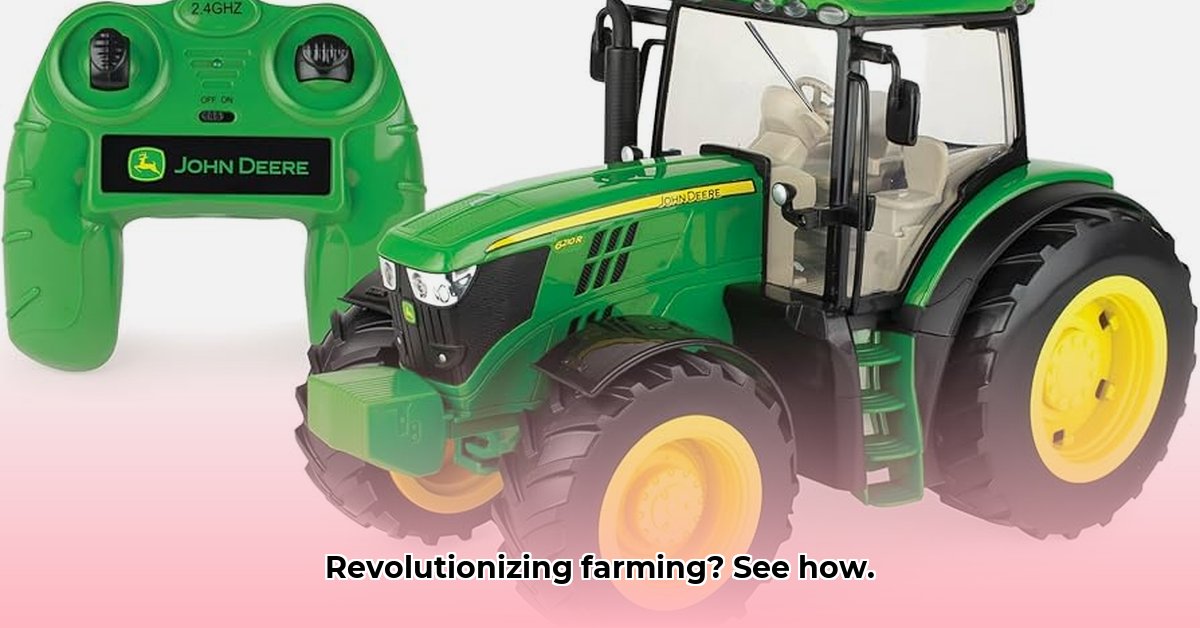
Remote-controlled John Deere tractors are rapidly transforming the agricultural landscape. This technology offers substantial potential for increased efficiency, reduced costs, and enhanced sustainability, but significant challenges remain. This article explores the current state of this technology, examining the market interest, technological capabilities, sustainability claims, and associated risks, ultimately offering actionable insights for various stakeholders. For more information on John Deere's tractor models, visit John Deere Tractors.
A Booming Market for Remote-Controlled Farming
Online searches reveal a significant surge in interest surrounding radio-controlled John Deere tractors. The sheer volume of search results on platforms like Amazon indicates considerable consumer interest, suggesting a potentially vast and untapped market. But what fuels this demand? Is it simple technological fascination, or a reflection of the agricultural sector's growing need for innovative, sustainable solutions? The answer likely lies in a combination of both, highlighting a shift towards more efficient and environmentally conscious farming practices.
Beyond the Toy: Advanced Capabilities and Potential Benefits
These aren't mere toys; modern radio-controlled John Deere tractors are sophisticated agricultural tools. They boast precision steering controlled remotely, enabling optimized field coverage, minimizing overlaps, and reducing wasted resources. Real-time performance monitoring provides valuable data for informed decision-making. Reduced soil compaction due to precise driving techniques offers improvements in soil health, contributing to higher yields and reducing the need for chemical inputs. Furthermore, the potential for lower fuel consumption directly translates to both environmental and economic benefits for farmers.
While the potential is substantial, concrete data on realized benefits remains limited. Manufacturer claims on sustainability, such as carbon footprint reduction, are often presented without the robust, independently verified data necessary for complete validation. Further research on this front is crucial to solidify these promising claims.
Sustainability Claims: Fact vs. Fiction
Manufacturers frequently emphasize the sustainable aspects of remote-controlled tractors, often citing programs to offset carbon emissions. However, the validity of these claims needs rigorous examination. A comprehensive lifecycle assessment, evaluating the entire environmental impact from production to disposal, is essential for a truly accurate picture. While reduced soil compaction is a likely benefit, leading to improved soil health and long-term yield increases, quantitative data substantiating this claim remains notably scarce. A more thorough investigation is needed to accurately assess the net environmental benefits.
Navigating the Challenges and Risks
Despite the impressive potential, numerous challenges hinder the widespread adoption of radio-controlled tractors. The high initial purchase price acts as a major barrier to entry, potentially exacerbating the economic disparity between larger and smaller farming operations. Reliable infrastructure is equally crucial. Consistent, high-speed connectivity (5G or satellite) is essential for uninterrupted operation; the lack thereof in many rural areas presents a significant obstacle.
Regulatory uncertainties further complicate matters. Clear guidelines on safety protocols and liability are vital for the safe and responsible use of this technology. The sophisticated technology also introduces vulnerabilities to cybersecurity threats. Malfunctions and security breaches could lead to severe consequences, from simple data loss to complete system failure.
Actionable Insights for Stakeholders
Successfully integrating radio-controlled tractors necessitates a collaborative effort involving diverse stakeholders. Let's examine actionable steps they can take:
1. Farmers:
- Short-term: Conduct thorough cost-benefit analyses; explore pilot programs; seek innovative financing solutions.
- Long-term: Invest in advanced operator training; embrace integrated pest management (IPM); explore crop diversification strategies.
2. Manufacturers:
- Short-term: Enhance technology reliability, simplify user interfaces, offer flexible financing options.
- Long-term: Invest in R&D for improved sustainability features (e.g., energy efficiency), proactively address regulatory changes.
3. Governments:
- Short-term: Provide financial incentives (subsidies, tax breaks), invest in rural infrastructure development, and promote educational training programs.
- Long-term: Develop supportive policies, fund independent research on long-term sustainability, and foster an environment conducive to technological innovation.
4. Investors:
- Short-term: Conduct thorough due diligence, focusing on market potential and risk mitigation strategies.
- Long-term: Support promising start-ups developing innovative technologies, invest in rural infrastructure improvements.
The Future of Farming: A Cautious Optimism
Radio-controlled John Deere tractors offer transformative potential for sustainable agriculture. However, their widespread and successful adoption hinges on addressing significant technological, economic, and regulatory challenges. This isn't solely about the tractors themselves; it's about developing the necessary supporting infrastructure and ensuring responsible implementation. Continued research is essential for providing a complete understanding of the technology's long-term costs and benefits, paving the way for a more efficient and sustainable agricultural future. The journey will be both complex and lengthy.
Key Takeaways:
- High Market Demand: Strong online interest indicates substantial market potential for remote-controlled tractors.
- Sustainability Potential: While promising, more data is needed to fully validate the environmental benefits.
- Significant Challenges: High initial costs, technological reliability, and regulatory uncertainty remain hurdles.